
We Cut Meta Ad Spend...and Still Closed About the Same Number of $10K Clients.
See how one brand studio reduced Meta ad spend, decreased low-quality leads, and continued closing approximately the same number of ideal clients per month who were worth around $10,000 each.
Get the before and after numbers and the strategy behind the shift.
By submitting this form you agree to receive the requested case study and occasional marketing emails from LN Marketing Services. You may unsubscribe at any time. View our privacy policy.
Free case study. Unsubscribe at any time.
01 INSIDE THE FREE CASE STUDY
The account was generating leads. But too much of the budget was being spent on low quality ones.
When I first entered the account, the studio was spending about $907.13 per month on Meta Ads and generating around seventeen leads.
The business was still closing roughly one to two ideal clients, but many of the other leads were lower quality or not financially aligned with the studio’s offer.
So the goal was not to increase the lead count.
It was to reduce wasted spend, improve the quality of the opportunities coming through, and protect the closing volume that was already creating real business value.
Inside, you’ll see:
what the account looked like before the strategy changed
how ad spend was reduced without sacrificing closing volume
why fewer leads created a better business outcome
how booked-call quality became a stronger success signal
what the customer path revealed before prospects converted
See the numbers, strategy, and decisions behind the result.
02 ABOUT THE STRATEGY
I don’t just manage the ads.
I look at what is actually ready to scale.
I’m Lauren Nebel, a paid growth strategist and Google Ads specialist. I help established businesses understand what is actually happening between their ads, website, tracking, offer, and customer path so they can make smarter decisions before spending more money trying to scale.
I learned paid ads through my own ecommerce business, so I know the pressure behind the numbers. Ad spend is not just another metric on a dashboard. It is real money tied to real business decisions.
That is why I use my Proof Before Scale Framework when I evaluate paid growth. It helps me look beyond campaign activity and understand whether the business has the signals, structure, and customer movement needed to support the next stage of growth.
Sometimes the opportunity is in the campaign. Other times, the real gap is the offer, landing page, tracking, product mix, or the path customers take after the click.
The goal is to find the next smartest move and scale what already has proof.
The Proof Before Scale Framework
A strategic way of evaluating the full paid-growth path before increasing budget or expanding campaigns.
It looks at whether the ads, offer, website, tracking, and customer behavior are giving us enough evidence to scale with more confidence.
Find the proof. Identify the gap. Scale what’s ready.
03 THE RESULTS
The result was a more efficient path to more Ideal client closes.
Before-and-after results reflect different reporting periods documented in the downloadable case study.
$907.13
Meta spend before (April1-30)
Around 17
Monthly leads before
$782.34
Meta spend after (June14-July14)
5 out of 5
Leads matched the ideal client profile during the focused review window
3
Ideal Clients Closed during the focused review period of June 14-July14
Approximately $260.78 in ad spend per ideal client acquired
The studio spent less, worked through fewer booked calls, and closed three ideal clients because the prospects entering the sales process were better aligned from the start.
04 BEHIND THE RESULT
The campaign didn’t need more lead volume. It needed less waste and more efficiency around the leads that mattered.
The business was already closing ideal clients from Meta Ads.
That told me there was proof in the system.
So the goal was not to rebuild everything from zero. It was to understand what was helping stronger prospects move forward, reduce the spend behind weaker-fit leads, and make the path more efficient.
Why this mattered
The account could not be judged by total lead volume alone.
The stronger signal was whether the right prospects had enough context to book and whether the business could protect those opportunities while spending less.
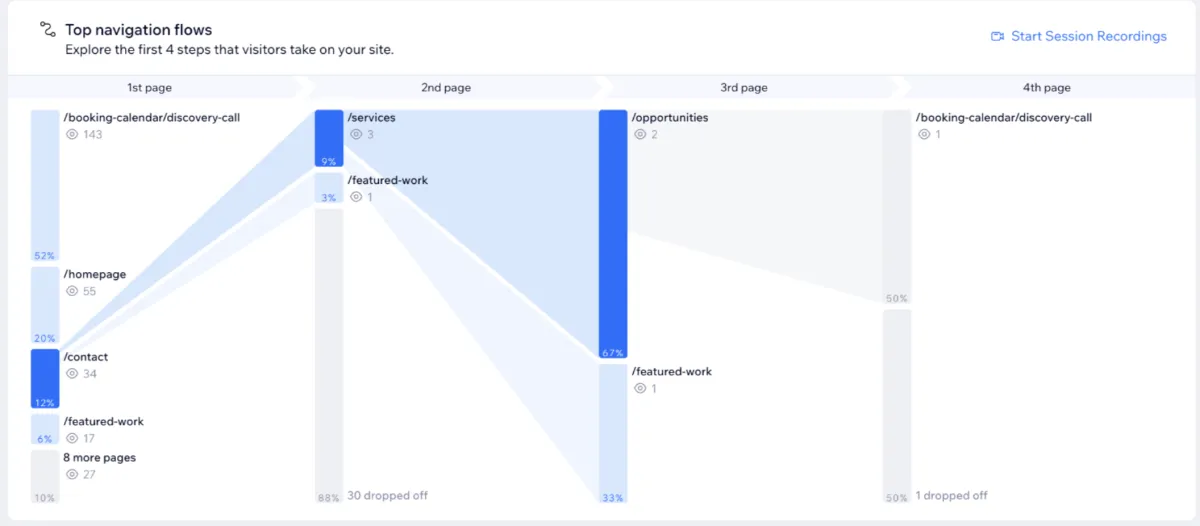
What the customer path revealed
Stronger prospects were not always ready to move directly from the first page into a booked call.
The navigation flow showed that visitors also moved through Services, Featured Work, and other supporting pages before taking the next step.
Those pages helped prospects understand the offer, build trust, and decide whether the studio was the right fit.
01
Tracked the path before the conversion
We looked at what people did between the ad click and the final inquiry or booked call.
02
Tested the level of commitment
The campaign compared a direct book-a-call path against a lower-friction inquiry path.
03
Used lead quality to guide testing
The next decision was based on which path created stronger-fit opportunities not just the highest number of submissions.
See the complete strategy, campaign decisions, and results.
05 GET THE CASE STUDY
See how the studio kept closing ideal clients while spending less.
Get the full case study and see how the account moved from higher spend and mixed-quality lead volume to a more efficient paid acquisition path.
Inside, I break down:
what the account looked like before
how the spend was reduced
why fewer, better-fit leads created a stronger result
how booked-call quality became the better success signal
what the customer path revealed before prospects converted
With ideal clients worth around $10,000 USD, the better result was not more leads.
It was protecting the opportunities that mattered while reducing the spend around the ones that did not.