PAID GROWTH INSIGHTS
Clearer thinking for businesses investing in paid growth.
I write about what happens when ads, tracking, landing pages, messaging, offers, and customer behavior do-or do not-work together.
These are practical observations from inside real accounts, built to help established businesses understand what the data is actually saying and make better decisions before putting more money behind the system.

START HERE
A few places to begin when paid growth feels harder to read.
These articles cover the patterns I see most often: unclear tracking, leaks after the click, and decisions being made from platform activity instead of real business movement.
PAID GROWTH STRATEGY
What I look at before making major campaign changes—and why the ad account alone rarely tells the whole story.
CUSTOMER PATH & CONVERSION
How to recognize when campaigns are generating traffic but the website, offer, or conversion path is failing to carry people forward.
CASE STUDY
A closer look at what changed when stronger performance signals helped guide budget and optimization decisions.
EXPLORE BY GROWTH QUESTION
Find the part of paid growth you are trying to make sense of.
What are the numbers really saying?
Tracking, attribution, lead quality, revenue signals, and understanding platform performance in the context of the business.
Tracking & Performance
What is happening after the click?
Landing pages, offers, messaging, follow-up, conversion friction, and the gaps between traffic and meaningful action.
Customer Path & Conversion
What needs to change before scaling?
Budget decisions, testing priorities, campaign structure, offer readiness, and the proof needed before increasing spend.
Paid Growth Strategy
What can we learn from real accounts?
Case studies, performance observations, strategic decisions, and the context behind measurable results.
Case Studies & Field Notes
LATEST PAID GROWTH INSIGHTS
Observations, case studies, and lessons from inside the work.
Not every performance problem needs another campaign. Sometimes the next move is better tracking, a clearer message, a stronger landing page, or a more honest read of what the customer is doing.
Audience Segmentation for Paid Ads: Smarter Testing, Clearer Results
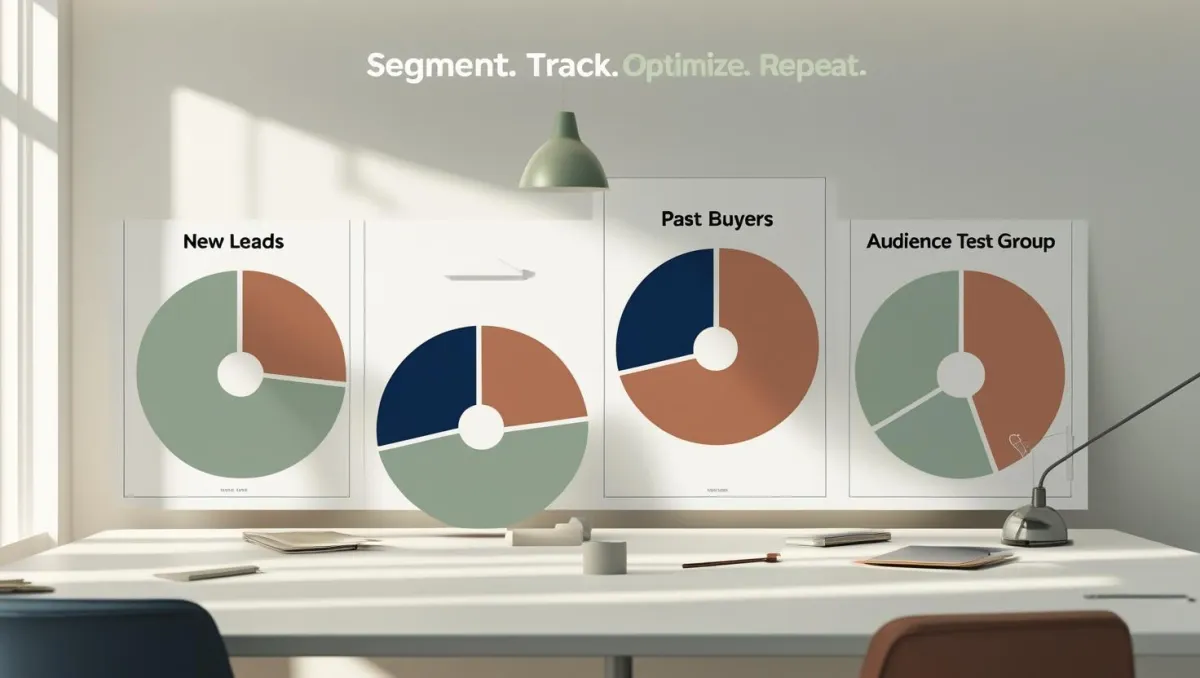
Audience Segmentation for Paid Ads: Smarter Testing, Clearer Results
Running ads without a segmentation strategy? That’s like tossing flyers out a car window and hoping one lands in the right hands.
Let’s not do that.
If you’re running Google Ads or Meta Ads and want real results—leads, purchases, booked calls—you need to go beyond broad targeting and start segmenting your audience with purpose.
This post walks you through how to segment your audience thoughtfully and how to track what’s working so you can stop guessing and start scaling with confidence.
Why Segmenting Your Audience Matters
Not everyone seeing your ad is in the same stage of their buying journey. The person who just discovered your brand isn’t ready for a hard sell—and the person who’s visited your site three times probably doesn’t need an intro.
When you segment your audience, you’re creating a better experience for each person. You’re also giving yourself a clear way to test what’s actually working (and what isn’t), without overspending.
4 Powerful Ways to Segment Your Audience
1. By Interest or Intent
Google Ads: Try custom segments with behavior-based keywords, like “best [your service] near me” or people who’ve visited competitor sites.
Meta Ads: Pair interest targeting (like “Small Business Owners” or “Holistic Wellness”) with behavior filters like “Engaged Shoppers” or “Business Page Admins.”
This shows you what types of interests or behaviors are actually converting—not just who’s clicking.
2. By Funnel Stage
Not all traffic is created equal. Here’s how to approach each stage:
Top of Funnel (TOF): New people. Use broader targeting like interests, lookalikes, or keyword-based audiences.
Middle of Funnel (MOF): Warmer leads. These are people who have visited your site, watched a video, or engaged on social.
Bottom of Funnel (BOF): Ready-to-buy. Think: past customers, cart abandoners, or people who filled out a lead form but didn’t convert.
Example: Someone who visited your pricing page probably needs a direct call-to-action. A cold lead? They need a little more nurturing.
3. By Demographics or Devices
It may sound basic, but these insights can be powerful:
Age range
Gender
Location
Device (mobile vs. desktop)
Mobile users might prefer short video ads. Desktop users may take the time to read through longer copy or product comparisons.
4. By Creative Type
Same audience. Different message. You can test:
Ad A: Pain-point focused
Ad B: Benefits or transformation
Ad C: Client testimonial or lifestyle imagery
This tells you which message style hits home with your audience—not just which segment is strongest.
How to Track What’s Actually Working
Here’s where we go from “I think this is working?” to “I know exactly what’s performing.”
1. Label Everything Clearly
Give your campaigns clear, descriptive names so you can easily tell them apart.
Example: TOF_Lookalike_30DayVideo_V1 or BOF_AbandonedCart_OfferTest_B
Don’t underestimate how much time (and confusion) this saves.
2. Use UTM Parameters
Add UTM codes to all your ad links so you can track traffic inside Google Analytics (or GA4).
Example:
utm_source=facebook&utm_medium=paid&utm_campaign=MOF_test2
This is how you connect the dots between ad spend and conversions.
3. Set Up Conversion Events (and Actually Test Them)
Google Ads: Use GA4 imports or direct conversion events like purchases or form submissions.
Meta Ads: Set up your Meta Pixel and define custom conversions like “Checkout Page Visited” or “Book Call Clicked.”
4. Use Built-in Reporting Breakdowns
Meta: Use the “Breakdown” feature to view results by age, gender, placement, device, etc.
Google: Use “Segments” and “Reports” to see which keywords or audiences are driving the most action.
These insights help you make smarter adjustments each week—without the guesswork.
5. Test With Intention (Not Chaos)
Use A/B testing tools (on Meta or Google) to isolate and test one variable at a time:
Headline A vs. Headline B
Image 1 vs. Image 2
Audience A vs. Audience B
Resist the urge to test everything at once. Focused testing gives you clean, usable data.
Final Thoughts
Your audience isn’t just a number. It’s a mix of real people—each at different points in their journey—who need different kinds of support.
When you start treating each group like its own conversation, your ads become more strategic, more cost-effective, and more aligned with how your dream clients actually make decisions.
Testing and tracking don’t have to feel overwhelming. In fact, they’re your best tools for turning guesswork into growth.
Want help segmenting your audience—or ready to offload the whole thing?
This is what I do. Whether you want a second set of eyes on what’s already running or full-service ad management that’s rooted in strategy, I’m here to help.
👉 Book a free discovery call or explore my services here.

LOOKING FOR THE PROOF BEHIND THE THINKING?
See how these decisions show up in real campaign performance.
The articles explain how I think about paid growth. The case studies show what that thinking looks like when it is applied across campaign strategy, tracking, customer behavior, landing pages, and budget decisions.

Blending Growth with innovation.
Navigation
Contact Us
Call Or Text: (916) 318-0373


© 2026 LN Marketing Services. All Rights Reserved