PAID GROWTH INSIGHTS
Clearer thinking for businesses investing in paid growth.
I write about what happens when ads, tracking, landing pages, messaging, offers, and customer behavior do-or do not-work together.
These are practical observations from inside real accounts, built to help established businesses understand what the data is actually saying and make better decisions before putting more money behind the system.

START HERE
A few places to begin when paid growth feels harder to read.
These articles cover the patterns I see most often: unclear tracking, leaks after the click, and decisions being made from platform activity instead of real business movement.
PAID GROWTH STRATEGY
What I look at before making major campaign changes—and why the ad account alone rarely tells the whole story.
CUSTOMER PATH & CONVERSION
How to recognize when campaigns are generating traffic but the website, offer, or conversion path is failing to carry people forward.
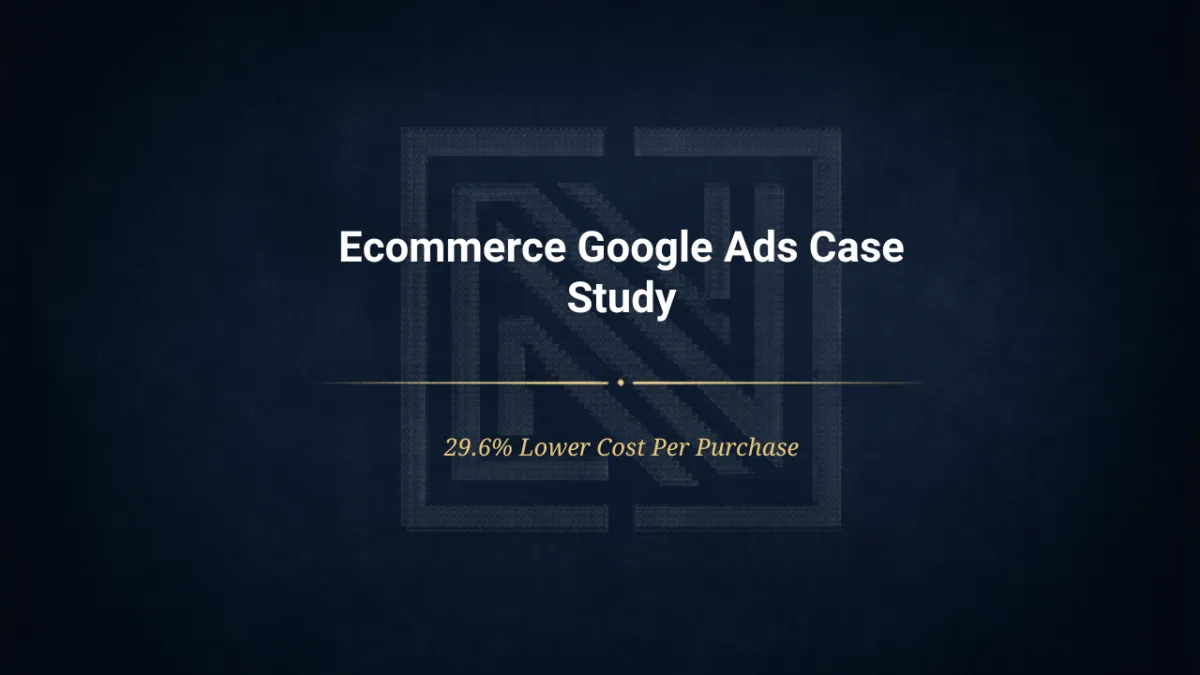
CASE STUDY
A closer look at what changed when stronger performance signals helped guide budget and optimization decisions.
EXPLORE BY GROWTH QUESTION
Find the part of paid growth you are trying to make sense of.
What are the numbers really saying?
Tracking, attribution, lead quality, revenue signals, and understanding platform performance in the context of the business.
Tracking & Performance
What is happening after the click?
Landing pages, offers, messaging, follow-up, conversion friction, and the gaps between traffic and meaningful action.
Customer Path & Conversion
What needs to change before scaling?
Budget decisions, testing priorities, campaign structure, offer readiness, and the proof needed before increasing spend.
Paid Growth Strategy
What can we learn from real accounts?
Case studies, performance observations, strategic decisions, and the context behind measurable results.
Case Studies & Field Notes
LATEST PAID GROWTH INSIGHTS
Observations, case studies, and lessons from inside the work.
Not every performance problem needs another campaign. Sometimes the next move is better tracking, a clearer message, a stronger landing page, or a more honest read of what the customer is doing.
Website Readiness Checklist: The Foundation You Need Before Running Google or Meta Ads
Website Readiness Checklist: The Foundation You Need Before Running Paid Ads
There’s a common assumption in digital marketing:
If results aren’t coming in, the ads must be the problem.
But after auditing dozens of accounts across Google and Meta, I can tell you something confidently:
Most ad performance issues are not ad problems.
They’re infrastructure problems.
Paid traffic is not a magic lever. It’s an amplifier. When you turn it on, it accelerates whatever already exists inside your business ecosystem — your messaging clarity, your tracking accuracy, your conversion structure, and your follow-up systems.
If those pieces are aligned, ads scale.
If they’re not, ads expose the cracks.
That’s why I created the Website Readiness Checklist — not as a marketing freebie, but as a structural audit tool.
Because scaling paid traffic without confirming your foundation is stable is like pouring water into a leaky bucket and wondering why it never fills.
Why Website Readiness Matters Before Google Ads or Meta Ads
Google traffic arrives with intent.
Meta traffic interrupts attention.
But both require the same backend structure:
Accurate tracking (GA4, Meta Pixel, event mapping)
Landing page alignment with the ad message
One clear conversion objective
Defined follow-up process
When those elements are missing, optimization becomes guesswork. You can adjust bids, test creatives, refine audiences — but if your conversion tracking is inaccurate or your landing page confuses visitors, performance will plateau.
This is where most businesses waste money.
Not because ads don’t work.
But because the system behind the ads isn’t prepared for scale.
The Strategic Shift: From Traffic Buyer to Growth Architect
There’s a difference between managing ads and architecting growth.
An ads manager focuses on campaigns.
A growth strategist evaluates the entire conversion ecosystem.
Before I increase budget for any client, I look at:
Is the data clean?
Is the messaging consistent from click to page?
Is the CTA singular and obvious?
Is the follow-up system capturing intent efficiently?
If the answer to any of those is unclear, scaling traffic isn’t the next move.
Stabilizing infrastructure is.
That’s what the Website Readiness Checklist helps you confirm.
Infrastructure Before Investment
This is the operating principle I use in every account:
Infrastructure before investment.
Before increasing budget.
Before testing new creative.
Before switching platforms.
Before blaming the algorithm.
Strengthen the system.
Because paid ads don’t create clarity.
They amplify it.
Download the Website Readiness Checklist
If you’re currently running Google Ads, Meta Ads, or planning to launch paid campaigns, audit your foundation first.
You can download the checklist here:
Audit first.
Then scale.

LOOKING FOR THE PROOF BEHIND THE THINKING?
See how these decisions show up in real campaign performance.
The articles explain how I think about paid growth. The case studies show what that thinking looks like when it is applied across campaign strategy, tracking, customer behavior, landing pages, and budget decisions.

Blending Growth with innovation.
Navigation
Contact Us
Call Or Text: (916) 318-0373


© 2026 LN Marketing Services. All Rights Reserved